Quranic Arabic vs Modern Standard Arabic vs Dialects
Quranic Arabic and Modern Standard Arabic share one script and one grammar; dialects are spoken systems of their own. Which to learn first, goal by goal.
· · Written by Amaan
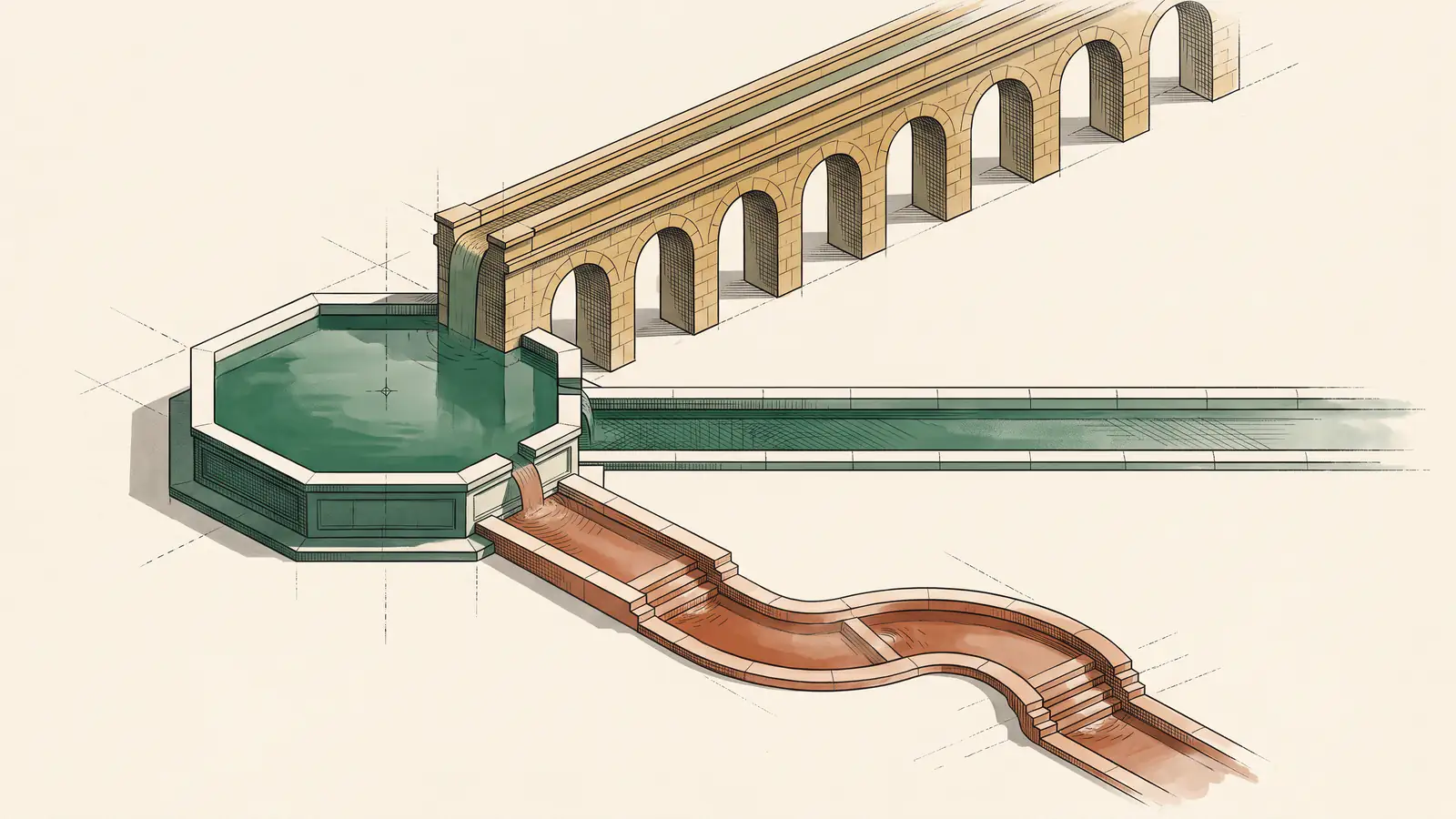
Should you learn Quranic Arabic, Modern Standard Arabic or a dialect first?
For most goals, start with fuṣḥā, the written Arabic that Quranic (Classical) Arabic and Modern Standard Arabic share. The two use the same script and essentially the same grammar and differ mainly in vocabulary and style, so fuṣḥā grammar carries into both. If your goal is the Qurʼan, add Qurʼanic vocabulary on top; if it is news, books or work, add modern vocabulary. Start with a dialect only when your goal is conversation with one community, such as family in Morocco or friends from Syria.
Quranic Arabic is Classical Arabic, the language of the Qurʼan and of the classical literature that followed it. Modern Standard Arabic (MSA) grew out of it in the late 19th and early 20th centuries.
Arabic speakers call both al-fuṣḥā and treat them as two periods of one language. Linguists separate them mainly by vocabulary and style, not by grammar.
A dialect is not fuṣḥā with an accent: the spoken varieties have lost the case endings, fixed their word order and grown new verb prefixes, and distant dialects can be hard for each other’s speakers to follow.
Reciting the Qurʼan and understanding it are separate skills. Understanding needs vocabulary and grammar, and the grammar is the same fuṣḥā grammar an MSA course teaches.
Start with fuṣḥā unless your only goal is conversation with one community; then start with that community’s dialect, ideally after learning the script.
No choice closes a door: fuṣḥā is understood by every literate Arabic speaker, and a dialect learnt later rests on the same roots.
What do Quranic Arabic, Modern Standard Arabic and dialect mean?
Three names circulate for Arabic, and they describe two different things. Quranic Arabic is the Arabic of the Qurʼan. Linguists call it Classical Arabic, because the same language carries the early poetry, the hadith collections, Qurʼanic commentary and the scholarship of the centuries that followed. Modern Standard Arabic, usually shortened to MSA, is the standardised written language that developed from it in the late 19th and early 20th centuries, as Arabic newspapers and printing spread.
Arabic speakers themselves rarely draw that line. They call both al-fuṣḥā, الفصحى, “the most eloquent” Arabic, from the same root as Fasaha’s own name, and they see the Arabic of the Qurʼan and the Arabic of a newspaper as two periods of one language. That is the sense in which this article uses fuṣḥā.
A dialect is something else: the Arabic a child learns at home and people speak every day, usually called al-ʿāmmiyya in the Arab East and ad-dārija, الدارجة, in the Maghreb. Fuṣḥā is generally nobody’s first language. It is learnt at school and used for books, the news, sermons and formal speeches. In 1959 the linguist Charles Ferguson made Arabic one of the four cases in his classic description of diglossia: one community, two varieties, each with its own jobs.
Is Quranic Arabic the same as Modern Standard Arabic?
In grammar, almost entirely yes. Both use the same script, the same system of roots and patterns, the same verb forms and the same case endings, the short vowels -u, -a and -i that mark a word’s role in the sentence. A verse of the Qurʼan and a line of a news report are analysed with the same grammar, the naḥw of the Arabic grammatical tradition. Modern prose favours some constructions that classical prose used less, such as opening a sentence with its subject, but it has not replaced the system.
The real difference is vocabulary. MSA keeps the classical core and adds what modern life needed, either by coining words from old roots or by borrowing. The word سيارة, sayyāra, appears three times in the Qurʼan, where it means a caravan or a company of travellers; in Sūrat Yūsuf it is a caravan that finds Yūsuf in the well. In MSA the same word means a car. Hātif, once “a caller”, now means a telephone.
Two practical differences follow. The Qurʼan is a fixed text, printed with every vowel mark, while most modern Arabic is printed without short vowels, so the reader supplies them. And the Qurʼan’s vocabulary is concentrated on its own themes, so a reader who knows only newspapers meets unfamiliar words in it, just as a reader who knows only the Qurʼan does in a newspaper. Grammar transfers in full; vocabulary transfers in part.
How are Arabic dialects different from fuṣḥā?
A dialect is not fuṣḥā with an accent. The spoken varieties have lost the case endings, so word order does their work; they have built new verb systems, with an indicative prefix b- or bi- in Egyptian and Levantine Arabic and ka- or ta- in Moroccan; and the Maghrebi dialects mark “I” on the verb with n-, so “I write” is ka-nekteb in Moroccan Arabic, where fuṣḥā has aktubu.
Linguists group the dialects into five families: Maghrebi, Egyptian and Sudanese, Mesopotamian, Levantine, and those of the Arabian Peninsula. Neighbouring dialects are largely mutually intelligible; distant ones can be hard going. Understanding is also lopsided. Speakers in the Maghreb usually follow Egyptian and Levantine Arabic, helped by decades of Egyptian, Syrian and Lebanese film and television, while speakers in the East often struggle with Moroccan or Algerian speech, which also carries Berber and French loanwords.
Everyday vocabulary moves too. Three common words show how far apart the major dialects sit:
- “I want”: fuṣḥā أريد (urīd); Moroccan bghit; Egyptian ʿāyez; Levantine biddi.
- “Now”: fuṣḥā الآن (al-ān); Moroccan daba; Egyptian dilwaʾti; Levantine hallaʾ.
- “What?”: fuṣḥā ماذا (mādhā); Moroccan shnu or ash; Egyptian ēh; Levantine shu.
When Arabic speakers from distant regions meet, they often shift towards fuṣḥā, mixing it with their dialects until both sides can follow.
Reciting the Qurʼan and understanding it are two different skills
Many British Muslims learnt to read the Qurʼan as children, at an after-school mosque or madrasa class, often starting from a Qāʿida primer. That training is real. It teaches the letters, the vowel marks and the rules of tajwīd, and it lets you read any page of the muṣḥaf aloud. It does not teach what the words mean, because it was never designed to.
Understanding needs three things that recitation leaves out: vocabulary, the way words are built from roots and patterns, and the grammar that tells you who did what to whom. The Quranic Arabic Corpus at the University of Leeds annotates all 77,429 words of the Qurʼan, and across them the same particles, pronouns and verb patterns return again and again. That recurring grammar is fuṣḥā grammar.
This is why a learner aiming at the Qurʼan does not need a separate grammar of Quranic Arabic. A beginner’s textbook of Modern Standard Arabic and a classical primer teach the same sentence types, the same case endings and the same verb forms. What changes is which words you learn first.
Which Arabic should you learn first? Match it to your goal
Start with fuṣḥā unless your only goal is conversation with one community. Fuṣḥā is the variety every literate Arabic speaker understands, it carries almost everything written in Arabic, and it gives a dialect learner the script and the roots. The exception is a learner who wants only to talk with one community and has little time; for that learner a dialect course and a regular speaking partner come first.
If you already speak a dialect, you start ahead. You have the sounds, a large share of the roots and an ear for Arabic word order. What you need is the script and the parts of fuṣḥā your dialect has dropped: the case endings, much of the dual and the formal vocabulary.
The useful question is not which Arabic is best but what you want to do with it in two years’ time. Write the answer down in one sentence, then find your line:
- Understanding the Qurʼan, your prayers and duʿāʾ: fuṣḥā grammar first, then Qurʼanic vocabulary, beginning with its most frequent words.
- Reading hadith, tafsīr or classical books: fuṣḥā grammar, then classical prose with a dictionary that shows roots.
- The news, a degree, a job or exams: Modern Standard Arabic, then the dialect of the country you work with.
- Talking to family in Morocco, Algeria or Tunisia: the script and fuṣḥā basics, then that family’s darija, learnt from the family.
- Talking to friends or colleagues from Syria, Lebanon, Jordan or Palestine: Levantine Arabic, ideally once you can read.
- Egyptian films and series: Egyptian Arabic.
Arabic grammar for beginners: what “fuṣḥā basics” means in practice
Fuṣḥā basics are a short list, and the same list serves a verse and a newspaper. None of it needs separate tracks for Quranic and modern Arabic: read first the kind of text your goal points to, and the grammar comes with you when you switch.
Classical teachers packed this core into very short books. Al-Ājurrūmiyyah, a 13th-century grammar by the Moroccan scholar Ibn Ājurrūm, is concise enough to be learnt by heart and was among the first books students memorised after the Qurʼan. Its rules work on a verse and on a headline alike.
“Learn fuṣḥā first” can sound like years of grammar before any reward. In practice the core is this:
- The script with its vowel marks, read fluently, including the way letters change shape inside a word.
- The two sentence types: the nominal sentence, which opens with a noun, and the verbal sentence, which opens with a verb.
- Roots and patterns: the root k-t-b carries the idea of writing, and patterns turn it into kataba (he wrote), kitāb (book) and maktab (office, desk).
- Attached pronouns such as -hu (his, him) and -hum (their, them), which turn one word into a phrase.
- The three case endings, -u, -a and -i, and the moods of the present-tense verb: together, iʿrāb, the system that marks each word’s role.
- The derived verb forms, met gradually as you read rather than memorised as a table.
Where Fasaha fits, and where it does not
Fasaha is a reading-first app for fuṣḥā. In its graded stories, articles, podcasts and videos, from A0 to C2, tapping any word opens its meaning, root, pattern and family, and the words you save come back for spaced review.
It is not a Qurʼan app: it has no muṣḥaf, no tajwīd lessons and no tafsīr, and for recitation a teacher who can hear you is still the right tool. It does not teach dialects either. If your goal is darija with your family or Levantine with your friends, learn it from them or on a dialect course, and keep Fasaha for reading.
Which Arabic to learn first, goal by goal
Find the line closest to your goal. The first line of each card says where to start; the note says what to add once you have it.
- Understand the Qurʼan and your prayers: — Start with fuṣḥā grammar, then Qurʼanic vocabulary. Begin with short sūras and the most frequent words; keep tajwīd with a teacher.
- Read hadith, tafsīr and classical books: — Fuṣḥā grammar, then classical prose. A short primer such as al-Ājurrūmiyyah gives you the rules classical authors take for granted.
- Follow the news, study or work in Arabic: — Modern Standard Arabic. Add the dialect of the country you work with once you read comfortably.
- Talk to family in Morocco, Algeria or Tunisia: — The script and fuṣḥā basics, then darija. Darija lives mostly in speech, so learn it from the family; expect Berber and French loanwords.
- Talk to friends or colleagues from Syria, Lebanon, Jordan or Palestine: — Levantine Arabic. Syrian and Lebanese television, and Syrian dubbing of Turkish drama, carry it across the Arab world.
- Watch Egyptian films and series: — Egyptian Arabic. Egypt led Arab film and television through the 20th century, so Cairo Arabic is widely understood.
- You speak a dialect but cannot read Arabic: — The script, then fuṣḥā grammar. You already have the sounds and many roots; fuṣḥā adds the case endings and the formal vocabulary.
- You are not sure yet: — Fuṣḥā. Every literate Arabic speaker understands it, and it leaves every other path open.
| Feature | Quranic (Classical) Arabic | Modern Standard Arabic | Spoken dialect |
|---|---|---|---|
| First language of | Nobody today | Almost nobody; it is learnt at school | Its speakers, in its own region |
| Script | Arabic, fully vowelled in printed copies | Arabic, usually without short vowels | Mostly spoken; written informally in Arabic or Latin letters |
| Grammar | Case endings and verb moods | The same system; final endings often dropped in speech | No case endings; its own verb prefixes and a fixed word order |
| Vocabulary | Older, centred on the text’s own themes | The classical core plus modern coinages and loans | Everyday words that differ from region to region |
| Example | sayyāra: a caravan | sayyāra: a car | “now”: daba, dilwaʾti, hallaʾ |
| Where you meet it | Prayer, recitation, religious scholarship | Books, newspapers, news broadcasts, official documents | Home, street, films, series, social media |
| First choice when | Your goal is the Qurʼan, through fuṣḥā grammar | Your goal is reading, study or work | Your goal is conversation with one community |
- Write your goal in one sentence — “Understand the sūras I pray with”, “read tafsīr in Arabic”, “talk to my grandmother in Fes”. The sentence decides the variety and which words come first.
- Learn the script with its vowel marks — Fuṣḥā is written in Arabic script whatever your goal. Read vowelled text aloud without hesitating before you add anything else.
- Learn the core of fuṣḥā grammar — Sentence types, roots and patterns, attached pronouns and the three case endings. A short classical primer and a modern grammar book cover the same ground.
- Read real texts with a root-aware dictionary — Choose the texts your goal points to, short sūras or graded modern stories, look words up by root, and save the ones you meet twice for review.
- Add your second layer — Qurʼanic vocabulary and tafsīr with a teacher, classical prose, or a dialect learnt from its speakers. Your grammar carries into all three; for a dialect, expect to relearn everyday words and verb prefixes.
Is Quranic Arabic the same as Modern Standard Arabic?
They share the script and essentially the same grammar, and Arabic speakers call both fuṣḥā. They differ mainly in vocabulary and style: MSA adds modern words and drops some old ones, and some Qurʼanic words have shifted meaning, as sayyāra moved from caravan to car.
Should I learn Quranic Arabic or Modern Standard Arabic first?
Learn fuṣḥā grammar first, since it serves both, and choose your first texts and words by your goal. For the Qurʼan, start with its most frequent words and short sūras; for news and work, start with modern texts. Switching later costs you vocabulary, not grammar.
Will Modern Standard Arabic help me understand the Qurʼan?
Yes, for the grammar and much of the vocabulary. You will still need Qurʼanic vocabulary and, for deeper meaning, tafsīr, because the Qurʼan’s style is compressed and some of its words carry older senses.
Which Arabic dialect should I learn?
The one spoken by the people you want to talk to. Egyptian and Levantine are widely understood thanks to film and television; Moroccan darija is the right choice for family in Morocco, even though speakers from the East often find it hard.
Do Arabic speakers understand the Qurʼan without studying it?
An Arabic speaker schooled in fuṣḥā follows much of it, but nobody speaks Classical Arabic at home, and native readers also turn to dictionaries and tafsīr for older words and dense passages.
Does Fasaha teach Quranic Arabic or dialects?
Fasaha teaches fuṣḥā through reading, so its grammar serves Qurʼanic reading too. It has no muṣḥaf, tajwīd or tafsīr, and it does not teach spoken dialects.
Sources
- Wikipedia — Modern Standard Arabic
- Wikipedia — Varieties of Arabic
- Wikipedia — Moroccan Arabic
- Wikipedia — Levantine Arabic
- Charles A. Ferguson, “Diglossia”, Word 15 (1959)
- Quranic Arabic Corpus, University of Leeds — root s-y-r (sayyāra)
- Quranic Arabic Corpus — FAQ (77,429 annotated words)
- Wikipedia — Arabic diacritics
- Wikipedia — Al-Ajurrumiyya
About Fasaha
Fasaha is a reading-first Arabic app. Every word in a story, a podcast, a video or an article opens into its meaning, root, pattern and family, and can be saved for spaced review.
- Available on iPhone, iPad, Mac and Android.
- Interface languages: English, Arabic, Turkish, Russian, Uzbek, Spanish, French, German, Indonesian, Malay, Urdu, Italian, Portuguese, Bengali, Kazakh, Simplified Chinese and Azerbaijani.
- Free to start; Premium opens the complete library and the stores handle billing.
- Teaches fuṣḥā, Modern Standard and Classical Arabic; it does not teach spoken dialects, tajwīd or tafsīr.
Keep reading
- How to learn Arabic from zero: an honest first-month plan: A week-by-week first month of Arabic for self-taught beginners: daily minutes, what to do, and how to tell that it worked.
- Understanding the Qurʼan in Arabic is a reading problem, not a memory problem: Most people who read the Qurʼan every day cannot read Arabic, and that is the global norm rather than a personal failure. Here is what closing that gap actually costs, in the order the work has to be done.
- The best Arabic app depends on a question nobody asks you first: Every ranking disagrees because each is answering a different question. Arabic is two distinct registers in one language, and the app built for reading classical texts is useless for chatting in a Cairo cafe.